Munch and Expressionism

February 18-June 13, 2016
http://www.neuegalerie.org

An exhibition examines Edvard Munch’s influence on his German and Austrian contemporaries, as well as their influence upon him. The show will offer a compelling new look at works by the Norwegian artist, whose painting The Scream has become a symbol of modern angst.  The exhibition will be comprised of approximately 35 paintings and 50 works on paper from both public and private collections worldwide. The German artists included in the exhibition are Max Beckmann, Erich Heckel, Ernst Ludwig Kirchner, Gabriele Münter, and Emil Nolde, and the Austrians included are Richard Gerstl, Oskar Kokoschka, and Egon Schiele.

Vigée Le Brun. Woman Artist in Revolutionary France

February 15–May 15, 2016
http://www.metmuseum.org/

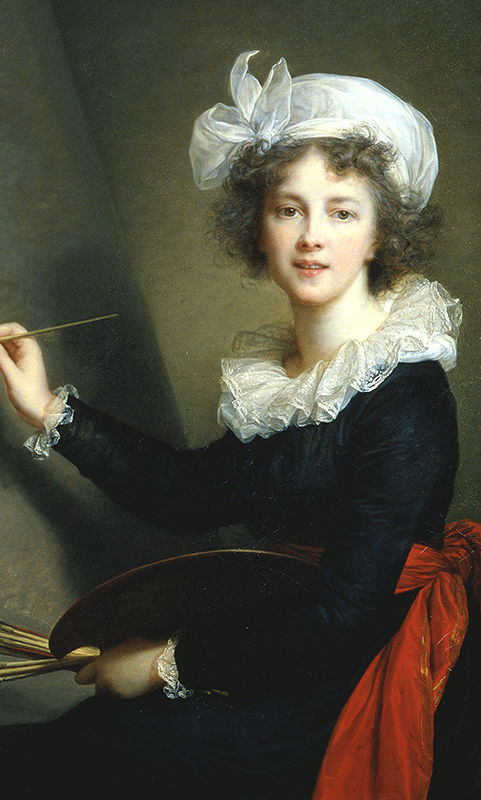
Elisabeth Louise Vigée Le Brun (French, 1755–1842) is one of the finest eighteenth-century French painters and among the most important of all women artists. An autodidact with exceptional skills as a portraitist, she achieved success in France and Europe during one of the most eventful, turbulent periods in European history.

In 1776, she married the leading art dealer in Paris; his profession at first kept her from being accepted into the prestigious Académie Royale de Peinture et de Sculpture. Nevertheless, through the intervention of Marie Antoinette, she was admitted at the age of 28 in 1783, becoming one of only four women members. Obliged to flee France in 1789 because of her association with the queen, she traveled to Italy, where in 1790 she was elected to membership in the Accademia di San Luca, Rome. Independently, she worked in Florence, Naples, Vienna, St. Petersburg, and Berlin before returning to France, taking sittings from, among others, members of the royal families of Naples, Russia, and Prussia. While in exile, she exhibited at the Paris Salons.

She was remarkable not only for her technical gifts but for her understanding of and sympathy with her sitters. This will be the first retrospective and only the second exhibition devoted to Vigée Le Brun in modern times. The eighty works on view will be paintings and a few pastels from European and American public and private collections.

Van Gogh's Bedrooms

February 14, 2016–May 10, 2016
http://www.artic.edu/

Vincent van Gogh’s bedroom in Arles is arguably the most famous chambre in the history of art. It also held special significance for the artist, who created three distinct paintings of this intimate space from 1888 to 1889. This exhibition—presented only at the Art Institute of Chicago—brings together all three versions of The Bedroom for the first time in North America, offering a pioneering and in-depth study of their making and meaning to Van Gogh in his relentless quest for home.

Van Gogh painted his first Bedroom just after moving into his beloved “Yellow House” in Arles, France, in 1888. He was so enamored with the work, now in the collection of the Van Gogh Museum in Amsterdam, that after water damage threatened its stability, he became determined to preserve the composition by painting a second version while at an asylum in Saint-Rémy in 1889. Identical in scale and yet distinct from the original, that second work is now one of the icons of the Art Institute’s permanent collection. Van Gogh created a smaller third version, now at the Musée d’Orsay in Paris, as a gift for his mother and sister a few weeks after making the second. While the three paintings at first appear almost identical, when examined closely, each reveals distinct and unique details.

Jheronimus Bosch

13 februari t/m 8 mei 2016
http://www.hetnoordbrabantsmuseum.nl/

The Noordbrabants Museum in Den Bosch (Holland) will stage an exhibition dedicated to Hieronymus Bosch from 13 February to 8 May 2016. This major overview exhibition of the works of Hieronymus Bosch (ca. 1450 Den Bosch 1516) is based on extensive global research conducted into his relatively small oeuvre. Never before have so many works of the master been brought together in Den Bosch where they were made. Many paintings were restored following the study of the Bosch Research and Conservation Project, receiving funding from amongst others The Getty Foundation (Panel Paintings Initiative). The 9 paintings (12 panels) will be on view to the public for the first time at this exhibition. The majority of the paintings will be returned to their original glory in 2016.

Seeing Nature. Landscape Masterworks from the Paul G. Allen Family Collection

February 6 - May 8, 2016
http://www.phillipscollection.org/

Featuring 39 masterpieces spanning five centuries, this exhibition draws from the Paul G. Allen Family Collection to explore the evolution of European and American landscape art. Highlights include Jan Brueghel the Younger’s 17th‐century allegorical paintings of the five senses that invite visitors to consider their own experiences of the world. Venice, one of Allen’s favorite cities, is sumptuously represented in the exhibition through stunning Venetian scenes by Canaletto, Édouard Manet, Claude Monet, and J. M. W. Turner, among others. Other highlights include five Monet landscapes spanning 30 years, from views of the French countryside to his late immersive representations of water lilies, evocative works by Paul Cézanne and Gustav Klimt, and modern and contemporary perspectives by 20th‐century artists as diverse as Georgia O’Keeffe, Edward Hopper, David Hockney, Gerhard Richter, and Ed Ruscha.

Pierre Bonnard: Painting Arcadia

February 6, 2016 – May 15, 2016
famsf.org/

Pierre Bonnard: Painting Arcadia is the first major international presentation of Pierre Bonnard’s work to be mounted on the West Coast in half a century. The exhibition will feature approximately 75 works that span the artist’s complete career, from his early Nabi masterpieces, through his experimental photography, to the late interior scenes for which he is best known.

The exhibition celebrates Bonnard (French, 1867–1947) as one of the defining figures of modernism in the transitional period between Impressionism and abstraction. Several themes from Bonnard’s career will emerge, including the artist’s great decorative commissions where the natural world merges with the bright colors and light of the South of France, where windows link interior and exterior spaces, and where intimate scenes disclose unexpected phantasmagorical effects.

Dadaglobe Reconstructed

5 February – 1 May 2016
http://www.kunsthaus.ch/

‘Dadaglobe’ brings together the more than two hundred artworks and texts that were sent to Tristan Tzara in 1921 by artists from all over Europe. This epochal but hitherto unpublished book project is finally being realized to mark the 100th anniversary of Dada’s foundation. After years of research, contributions that have since been dispersed around the globe have been assembled once again for an exhibition that is a milestone in recent Dada research. The presentation comprises self-portraits, photomontages and collages, drawings, book page designs, poems and essays as well as manuscripts, printed matter and revealing historical documents. ‘Dadaglobe’ is an impressive survey of the artistic diversity, socio-political relevance and art-historical impact of Dada. With contributions by Hans Arp, André Breton, Max Ernst, Hannah Höch, Sophie Taeuber-Arp and some 30 other artists.

Treasures from the House of Alba: 500 Years of Art and Collecting

February 5–May 1, 2016
http://fristcenter.org/

Drawn from one of the oldest and most significant private collections in Europe, Treasures from the House of Alba: 500 Years of Art and Collecting features works by Goya, Murillo, Rubens, Titian, and more from the splendid palaces of the Alba dynasty in Spain. Co-organized by the Meadows Museum and the Casa de Alba Foundation, the exhibition brings together more than 130 works of art dating from antiquity to the twentieth century. This is the first major exhibition outside Spain of works from the collection of the House of Alba—a prominent Spanish noble family with ties to the monarchy since the fifteenth century.

Highlights include masterpieces of Dutch, Flemish, German, Italian, and Spanish painting, such as Francisco Goya’s The Duchess of Alba in White and Leonardo Bassano’s recently conserved Forge of Vulcan. Handwritten documents and maps by Christopher Columbus will be on display, including his list of the people who accompanied him on his 1492 Journey of Discovery and a drawing of the coastline of La Española (Hispaniola), the first island he discovered in the New World (now occupied by the Dominican Republic and Haiti). Prints and drawings, sculptures, letters, illuminated manuscripts, decorative objects, and tapestries provide further insight into the role of the Alba family in world history.

Painting the Modern Garden: Monet to Matisse

30 January — 20 April 2016
https://www.royalacademy.org.uk

Using the work of Monet as a starting point, this landmark exhibition examines the role gardens played in the evolution of art from the early 1860s through to the 1920s.

Trace the emergence of the modern garden in its many forms and glories as we take you through a period of great social change and innovation in the arts. Discover the paintings of some of the most important Impressionist, Post-Impressionist and Avant-Garde artists of the early twentieth century as they explore this theme.

Mavericks. Breaking the Mould of British Architecture

26 January — 20 April 2016
www.royalacademy.org.uk

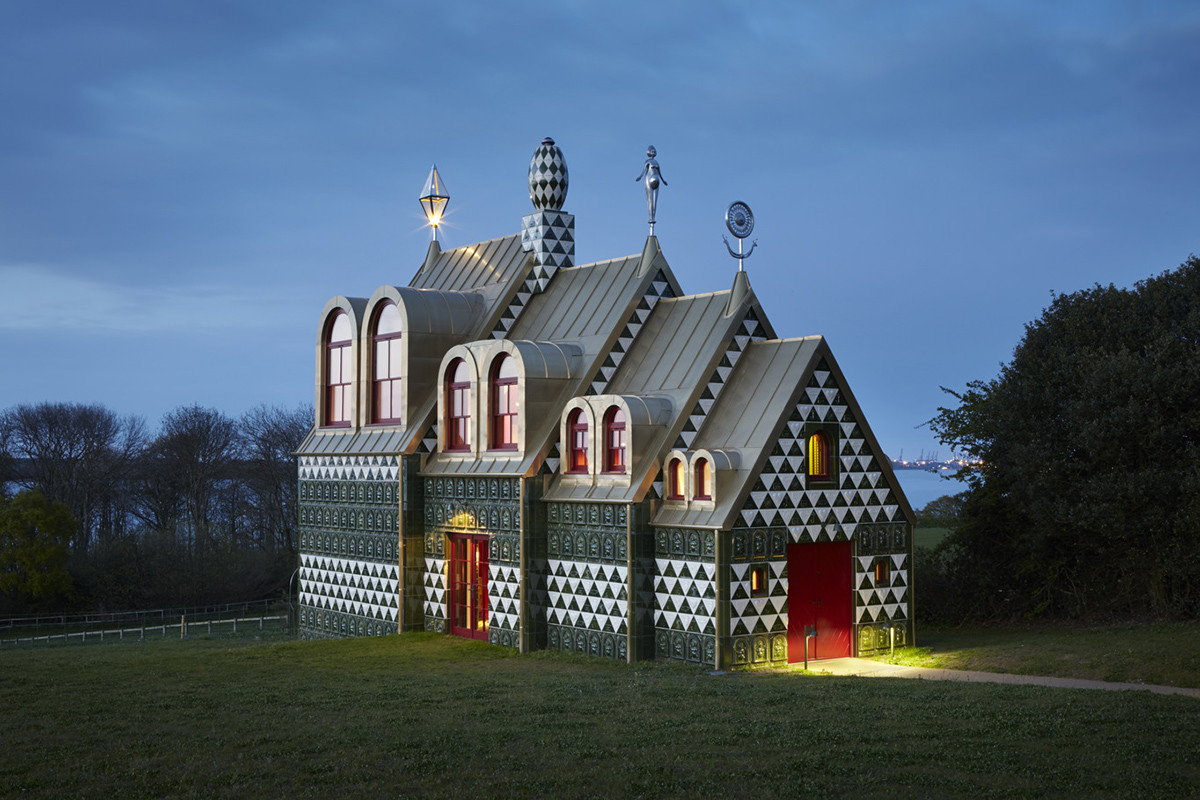
Charting the course of British architecture through twelve maverick architects: Smythson, Vanbrugh, Wyatt, Soane, Cockerell, Mackintosh, Holden, Goodhart-Rendel, Stirling, Price, FAT and Hadid.

What makes an architect a maverick? The first and most obvious answer is when they refuse to conform to the norms of mainstream architectural culture, whether by designing in a particularly idiosyncratic way or through working on the leading edge of architectural design, driving it forward. But architects can also be maverick in other ways, such as in their relationship to the discipline and profession of architecture. These are mavericks questioning what architecture is and how it should be practised.