Показаны сообщения с ярлыком The National Gallery. Показать все сообщения

Rembrandt: the Final Years

15th October 2014 - 18th January 2015
www.nationalgallery.org.uk


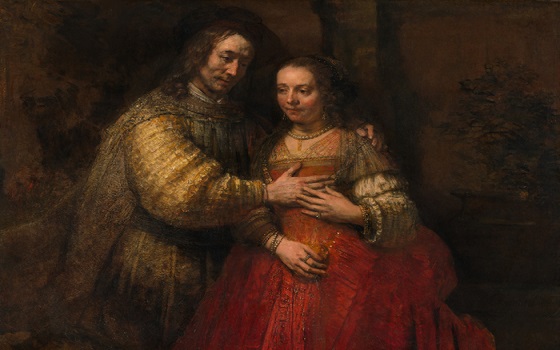
Rembrandt: The Final Years offers visitors the once-in-a-lifetime opportunity to experience the passion and innovation of Rembrandt’s late works, in an exhibition organised by the National Gallery in collaboration with Amsterdam’s Rijksmuseum.

The exhibition will bring together approximately 40 paintings, 20 drawings and 30 prints, featuring key works lent by European and North American museums including the National Gallery of Art in Washington and the Mauritshuis in the The Hague.

Rembrandt's restless creativity gathered new energy as he aged. Between the 1650s and his death in 1669 he consciously pursued a new style that was even more expressive and profound. His audacious manipulation of printing and painting techniques, and his new and original interpretations of traditional subjects, gave his work a depth that influenced countless printmakers, painters and draftsmen in the generations that followed.

This extraordinary exhibition highlights the formal and iconographic concerns that occupied Rembrandt in the final years of his life. The works he produced during this period are soulful, honest and in many ways define our image of Rembrandt as a man and as an artist.

Making Colour

18 June – 7 September 2014
http://www.nationalgallery.org.uk

‘Making Colour’ will provide visitors with a unique and exceptional opportunity to journey through the history of colour, by exploring the wide range of materials that are used to create colour in paintings and other works of art.

‘Making Colour’ is the first exhibition of its kind in Britain. Each room will be dedicated to a particular colour from the spectrum, as well as a room devoted to gold and silver.

‘Making Colour’ will draw on the expertise of the Gallery’s Scientific Department and the spectacular range of paintings in the Collection. The exhibition will help visitors to understand the history of the use of colour over a 700-year period – from the early Renaissance to the Impressionist movement.

Visitors will explore the origins and developments of the physical materials themselves, from natural and mineral products to manufactured pigments. The exhibition also examines the material problems faced by artists in achieving their painterly aims; the breakthroughs they struggled for and the technical challenges they faced.

Several major national cultural institutions have loaned works for the display – which has painting at its heart but also includes minerals, textiles, ceramics and glass. These form a rich and diverse exhibition, which illustrates the importance of colour in the way that creators of works of art experience and represent the world.

Building the Picture: Architecture in Italian Renaissance Painting

30th April 2014 - 21st September 2014
www.nationalgallery.org.uk

Architecture forms the basis of many Italian Renaissance paintings and now, as the result of a research partnership between the National Gallery and the University of York, visitors are invited to explore its differing representations in the exhibition ‘Building the Picture: Architecture in Italian Renaissance Painting’.

Depictions of buildings in Italian Renaissance works by artists such as Duccio,Botticelli and Crivelli offer a fascinating insight into the architecture of the time. While some reflect real architectural forms, others are deliberately fantastical; defying structural possibility but offering a convincing setting for biblical and mythological tales.

In the first exhibition of its kind in Britain, ‘Building the Picture: Architecture in Italian Renaissance Painting’ will consider the ways in which architecture was represented and used in pictures from the 14th, 15th and 16th century - how it was employed to frame figures and construct illusions of space, and how it shaped how contemporaries understood these paintings.

Paintings from the National Gallery Collection will form the heart of the exhibition, which also includes loans from other collections in the United Kingdom including from the National Galleries of Scotland.

The Sunley Room Exhibition Programme is generously supported by The Bernard Sunley Charitable Foundation.

Veronese: Magnificence in Renaissance Venice

19th March 2014 - 15th June 2014
www.nationalgallery.org.uk

The National Gallery invites visitors to experience the key works of Paolo Veronese; one of the most significant, influential and beautiful painters of the Venetian Renaissance, in the first monographic show on the artist to be held in the United Kingdom.

The National Gallery owns ten paintings by Veronese and these will be displayed next to other major works by the artist which have been loaned by European and American museums to form a display of about 50 works. These will offer visitors the opportunity to enjoy his magnificent visions such as ‘The Family of Darius before Alexander’ and the ‘Allegories of Love’; a series of four paintings  which each concentrate on a specific aspect – ‘Unfaithfulness’, ‘Scorn’, ‘Respect’ and‘Happy Union’.

Veronese created works ranging from complex fresco decorations of villas and palaces to large-scale altarpieces, smaller devotional paintings, mythological, allegorical and historical pictures, and portraits. His works were sought after by collectors and studied by artists in the 17th and 18th centuries, with Carracci,Rubens, Tiepolo and Watteau among those indebted to his art.

Strange Beauty: Masters Of The German Renaissance

19th February 2014 - 11th May 2014
http://www.nationalgallery.org.uk/

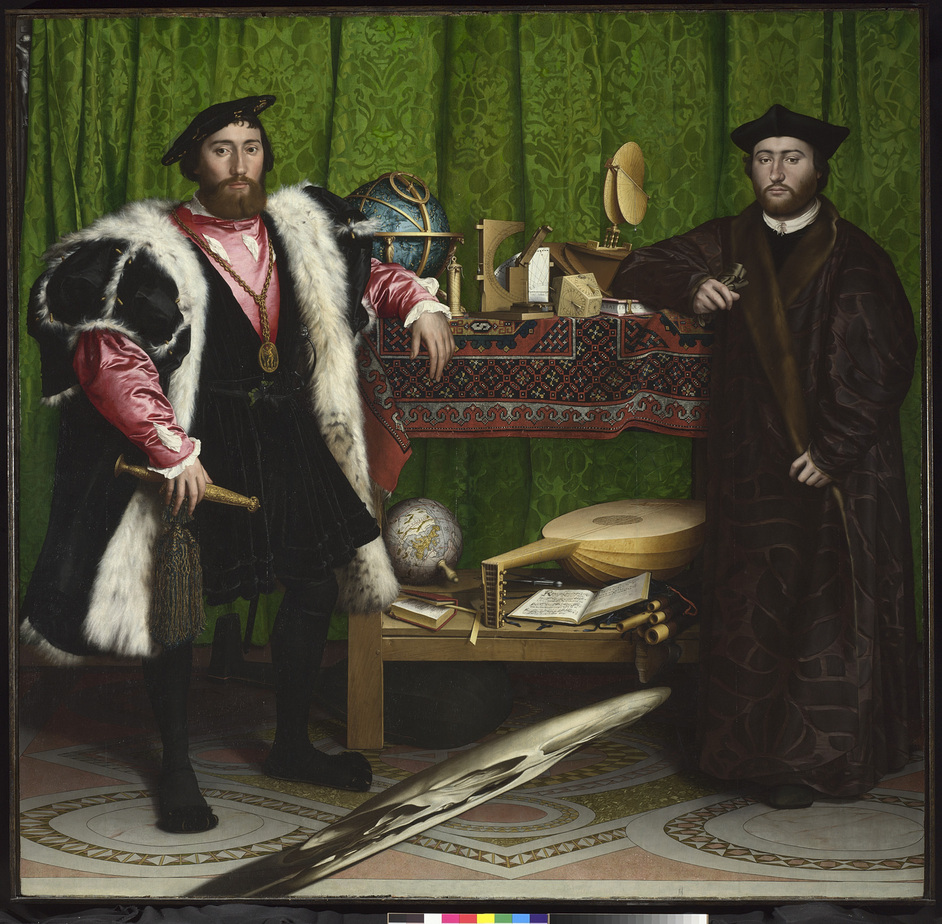
This exhibition takes a fresh look at German Renaissance paintings in the National Gallery Collection, providing insights into the way these works were perceived in their time and in the recent past, and how they are seen today.

It will focus on some of the best-known artists of the period, including Hans Holbein the Younger, Albrecht Dürer and Lucas Cranach the Elder.  All famous artists in their own time, the exhibition will highlight the ways in which their paintings, drawings and prints were valued in the 16th century for qualities such as expression and inventiveness.

The exhibition will also examine the evolution of the perception of German Renaissance art and the reasons why attitudes towards it were mixed in the 19th and early 20th centuries, especially in the context of the National Gallery Collection. While some viewers admired the artists’ technical mastery and their embodiment of a perceived German national identity, others saw these works of art as excessive or even ugly – particularly when compared to works of the ItalianRenaissance.

This exhibition is the result of collaboration between the National Gallery and the University of York.

The Portrait in Vienna 1900

www.nationalgallery.org.uk
9th October 2013 - 12th January 2014

The striking paintings of Gustav Klimt, Egon Schiele and Oskar Kokoschka star in this major exhibition which examines the central role portraiture played in Viennese painting and the upheaval in the tradition that marked the years around 1900.

Exploring Viennese portraiture during the Austro-Hungarian Empire (1867–1918), a powerful multi-national empire, this ground-breaking exhibition shows how the imperial and bourgeois traditions of 19th century art were both sustained and broken-apart by the innovations of avant-garde artists.

The exhibition traces the distinctive flourishing of modern art in Vienna in the years before 1918 which saw the end of the First World War, the collapse of the empire, and the deaths of both Klimt and Schiele

Vermeer and Music: The Art of Love and Leisure

26.06 - 08.09.2013
www.nationalgallery.org.uk

Explore the musical pastimes of the 17th century Netherlands through a lively display combining the art of Vermeer and his contemporaries with rare musical instruments and songbooks of the period.
For the first time the National Gallery’s two paintings by Vermeer, Young Woman Standing at a Virginal and Young Woman Seated at a Virginal will be brought together with Vermeer’s Guitar Player, which is currently on exceptional loan from the Iveagh Bequest, Kenwood House.

These beautiful and evocative paintings by Vermeer will be displayed with works by his contemporaries and juxtaposed with musical instruments and songbooks from the same period.

Music was one of the most popular themes in Dutch painting, and carried many diverse associations. In portraits, a musical instrument or songbook might suggest the education or social position of the sitter; in scenes of everyday life, it might act as a metaphor for harmony, or a symbol of transience.

The exhibition will display 17th-century virginals (a type of harpsichord), guitars and lutes alongside the paintings to offer a unique insight into the painters’ choice of instruments, and the difference between the real instruments and the way in which the painters chose to represent them.

The exhibition will also incorporate music of the era in various ways, enriching the visitor’s experience of the serene and elegant ambiance created in paintings by Vermeer and other masters of the Dutch Golden Age