Lapislazzuli – Magia del blu

9 giugno – 11 ottobre
http://www.polomuseale.firenze.it/

Nel Rinascimento la preziosità del materiale fu particolarmente apprezzata a Firenze. Proprio alla corte dei Medici ebbe inizio una delle più spettacolari collezioni di oggetti in lapislazzuli d’Europa: non solo coppe, vasi e anfore, ma anche mobili intarsiati, piani di tavolo e commessi prodotti nelle botteghe fondate da Francesco I nel Casino di San Marco e nei laboratori istituiti da Ferdinando I nel complesso vasariano degli Uffizi, fino al tramonto della dinastia.

Il lapislazzuli, ridotto in polvere ad uso di pigmento, fu utilizzato dall’antichità fino al XIX secolo. Colore iconografico della Santa Vergine, colore simbolico della dignità reale, colore emblematico dei re di Francia, colore della moda: il blu diventa, verso la fine del Medioevo, il più bello e nobile fra i colori. Quando il lapislazzuli fece la sua prima apparizione in Europa, era conosciuto con il termine di “ultramarinum”, cioè proveniente da “al di là del mare”, da cui il nome di oltremare. Importato in Europa in quantità importanti dai mercanti veneziani, il lapislazzuli veniva pagato a peso d’oro e divenne il “blu” per antonomasia, uno dei colori più ricchi e preziosi, che veniva spesso associato alla porpora e all’oro. L’utilizzo del lapislazzuli in campo pittorico sarà oggetto di una sezione della mostra.

Japanese Masks: From Religious Procession to Noh Performance

June 9, 2015 - July 20, 2015
http://www.kyohaku.go.jp/

This exhibition features approximately thirty heirloom masks belonging to temples and shrines in the Kyoto region. Among them are Heian-period (794–1185) processional masks of the Twelve Devas, which are used at Tō-ji Temple during rites for its five-story pagoda; Nanbokuchō-period (1333–1392) processional masks of the Eight Classes of Protectors; a Kamakura-period (1185–1333) mask of Vaiśravana (Bishamonten) used in the New Years Eve tsuinae ritual at the Kokubun-ji Temple in Tango; and Noh and Kyōgen masks from Kyoto shrines dating to the Muromachi (1392–1573) and Edo (1615–1868) periods. While these richly varied masks were created for functional use in rituals or performances, they also exhibit distinctive sculptural characteristics exemplifying the periods in which they were made.

…русская Армения – Россия армянская…

Выставка по итогам фотоконкурса
18 июня -12 июля
www.gmir.ru

На протяжении веков русский и армянский народы, принадлежащие к разным этническим и языковым группам, но объединенные общей культурной и религиозной традицией, жили в тесном контакте, мире и согласии.

Богатая событиями политическая история России и Армении способствовала сложению особого духовного климата, характерными чертами которого было и есть взаимное уважение, сотрудничество и диалог культур, бережное отношение к своему историческому прошлому. Редкое явление в мировой истории – Армения и Россия никогда не вступали в вооруженные конфликты, никогда живущие бок о бок русский и армянский народы не допускали взаимного кровопролития.

В 2015 году исполняется сто лет геноциду армян – массовым убийствам, впервые в истории официально признанным преступлением против человечности. Настоящий проект – дань памяти жертвам страшной катастрофы и послание будущим поколениям.

В июне 2015 г. в Музее истории религии будет экспонироваться итоговая выставка проекта, в состав которой войдут лучшие из представленных на конкурс работ.

ANISH KAPOOR

Juin - Octobre 2015
http://www.chateauversailles.fr/

Après Lee Ufan en 2014, Anish Kapoor est l’artiste contemporain invité de l’été 2015 à Versailles. Si Lee Ufan comme Guiseppe Penone en 2013 avait voulu « dialoguer » avec André Le Nôtre, c’est un regard plus politique que porte Anish Kapoor sur le pouvoir et sa représentation en ce Tricentenaire de la mort de Louis XIV. De juin à octobre, il sera présent dans les jardins du Château, ainsi que, de façon totalement inédite, dans un lieu méconnu mais emblématique de Versailles.
Né à Bombay en 1954, Anish Kapoor vit et travaille à Londres. Ses créations sont très régulièrement présentées dans les grands musées et les institutions internationales. En France, sa dernière grande exposition date de 2011, pour sa participation à Monumenta au Grand Palais.  

The Master Collector Karoline Luise of Baden

30 May 2015 – 6 September 2015
http://www.kunsthalle-karlsruhe.de

Karoline Luise of Baden (1723–1783) shaped the art collection of the margraves of Baden more than any other before or since. In 2015 the Staatliche Kunsthalle Karlsruhe will be devoting a Great State Exhibition to this passionate art collector. The exhibition is due to run from 30 May to 6 September 2015 and will coincide with celebrations marking the 300th anniversary of the city of Karlsruhe.

The centrepiece of the show will be the presentation of Karoline Luise’s Mahlerey Cabinet, a collection that once boasted more than 200 paintings, most of which are still preserved in the Kunsthalle today. Her original collection included Dutch masterpieces of the 17th century and great works of French painting from the 18th century, among them canvases by Rembrandt Harmensz van Rijn, David Teniers, and Jean Siméon Chardin

Autoportraits du Musée d'Orsay

30 mai au 31 août 2015
http://mban.nancy.fr/

Le Musée des Beaux-Arts de Nancy aborde, dans cette exposition d'une quarentaine d'œuvres du Musée d'Orsay, le thème de l'autoportrait.

Exercice d'introspesction, l'autoportrait questionne depuis la Renaissance la vision de l'artiste par lui-même. Au XIXe siècle, période de bouleversements artistiques et de rejet de l'académisme, l'autoportrait fait parfois office de manifeste.

Certains peintres comme Courbet mettent en avant l'image de l'artiste dans son atelier et revendiquent par ce biais la reconnaissance de leurs œuvres. D'autres, comme Carpeaux, Redon, Gauguin ou Cézanne mélangent recherche picturales et introspection psychologique.

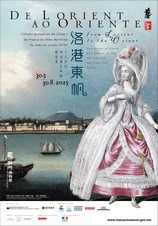
From Lorient to the Orient – Port Cities of China and France on the 18th Century Maritime Silk Route

2015/5/30 - 2015/8/30
http://www.macaumuseum.gov.mo/

“From Lorient to the Orient - Port Cities of China and France on the 18th Century Maritime Silk Route” is an important exhibition presented by the 26th Macao Arts Festival and Le French May. It mainly presents the French and Chinese port cities of Lorient, Macao and Canton, cities located along the eastern maritime trade route. It shows how the French East India Company and the port of Lorient, built by King Louis XIV of France, contributed to the prosperity of the Eurasian maritime trade in the 18th century and their impact on culture, art, religion and daily life in that era. In addition, the Chinoiserie trend in Europe, a result of the continuous cultural exchange between the East and the West, extensively influenced the artworks and daily commodities.

The items on display, including textiles, costumes, oil paintings, prints and porcelain, are on loan from various museums in France, such as the Musée de la Compagnie des Indes de Lorient, Musée des Art Décoratifs, Musée national des Chateaux de Versailles et de Trianon and the Musée de la Toile de Jouy.

Порт-букеты XIX – начала XX вв. из коллекции Билджи Кенбера, Франция

27 мая - 23 августа
http://www.hermitagemuseum.org/

Удивительный по своей красоте аксессуар порт-букет уже не встретишь в современном мире. А еще около ста пятидесяти лет назад ни одна дама не выходила в свет без этой маленькой изящной детали гардероба.

С практической точки зрения, порт-букет – это конусообразная подставка для цветов, которая позволяла даме удобно держать в руках в течение вечера подаренный ей букет. Кроме того, эта маленькая деталь несла еще и декоративный характер, оживляя и дополняя наряд.

Первые порт-букеты появились при Людовике XIV и изготавливались из плотной бумаги. Но постепенно эти вещицы стали делать из серебра или кости и украшать драгоценными камнями, цепочками или изящным литьем. Наиболее сложные порт-букеты и вовсе представляли собой миниатюрные вазы с водой, которые позволяли цветам не вянуть в руках у их обладательниц.

На выставке можно будет увидеть эти удивительные аксессуары XIX – начала XX веков из частной коллекции Билджи Кенбера.

GOLD AND IVORY. Paris, Pisa, Florence, Siena. 1250-1320

from 27 May to 28 September 2015
http://www.louvrelens.fr

125 exquisite works explore the artistic relationships between Paris and Tuscany in the latter half of the 13th century.

The 2015 summer exhibition at the Louvre-Lens highlights the wealth of artistic exchanges between the capital of the Kingdom of France and what is now Tuscany in the latter half of the 13th century.

Thanks to exceptional loans from around twenty prestigious European museums, the exhibition lifts the veil on the relationships between the major centres of artistic creation of the period: Paris, Florence, Siena and Pisa. The exhibition brings together more than 125 exquisite works: monumental statuary, gold background paintings, illuminated manuscripts, fine enamels and ivories. In particular, these works reveal the influence of French exponents of High Gothic style on the Tuscan sculptors and painters of the late 13th century, within a cultural area that would become the cradle of the early Renaissance.

Tea, Coffee and Chocolate. The boom of exotic drinks in 18th century Paris, exhibition

from 26 May 2015 to 27 September 2015
www.museecognacqjay.paris.fr/

New flavours. Praised for their medical and therapeutic virtues, the "exotic" beverages, introduced in the 17th century in Europe became a real cornerstone of pleasure and social life during the 18th century. Drinks made with cocoa, coffee and tea - plants not grown in Europe - became an integral part of aristocratic and the upper middle class society following their official introductions to the courts of Europe. As an imported material, their high purchase price in the 17th and 18th centuries classed tea, coffee and chocolate as luxury goods and added to their image as prestigious items. This was reflected in items of furniture and tableware that were designed for the consumption of these new drinks. Porcelain tea sets and other beautiful and luxurious pieces were produced in specialised manufactories. The rise of these products also created a new need for places designed for the public consumption of these drinks, such as cafes, and new mealtime additions such as at breakfast and afternoon tea, that spread throughout society. This exhibition offers a new overview of these beverages and their entry into the rituals of everyday life, presenting works by many iconic 18th century artists such as Boucher and Chardin.