Bazm and Razm. Feast and Fight in Persian Art

February 17–May 31, 2015
http://www.metmuseum.org

For centuries, Persian kingship was epitomized by two complementary pursuits: bazm (feast) and razm (fight). The ruler's success as both a reveler and hunter/warrior distinguished him as a worthy and legitimate sovereign. The pairing of bazm and razm as the ultimate royal activities is an ancient concept with roots in pre-Islamic Iran. It is a recurring theme in the Shahnama (or Book of Kings)—the Persian national epic—as well as other poetic and historic texts.

This exhibition will feature some three dozen works of art in various media, created between the fifteenth century and the present day. Works from the Museum's Department of Islamic Art that illustrate the linked nature of bazm and razm will be displayed alongside corresponding works—primarily Persian—from the departments of Asian Art, Arms and Armor, and Musical Instruments. The exhibition will chart the gradual shift in meaning and usage of this pairing as it emerged from a strictly royal, or princely, context and became more widespread

Spectacular Rubens

Feb 15, 2015 - May 10, 2015
http://www.mfah.org/

In the early 1620s, Flemish painter Peter Paul Rubens completed one of his greatest achievements: designing the Triumph of the Eucharist tapestries. The most elaborate and expensive tapestries made in Europe in the 17th century, the 20 monumental works in this series celebrate the glory of the Roman Catholic Church.

Rubens (1577–1640) was commissioned to create the tapestries by the Infanta Isabel Clara Eugenia, governor-general of the Netherlands, as a gift to her favorite convent, the Monasterio de las Descalzas Reales (Convent of the Barefoot Royals) in Madrid. Raised at the Spanish court, the infanta was the daughter of Habsburg monarchs Philip II and Isabel of Valois. Spectacular Rubens reunites Rubens’s exuberant oil sketches painted for this commission with the original tapestries, the largest number of works for the Eucharist series assembled in more than half a century. The exhibition offers an unrivaled opportunity for visitors to experience the Baroque master’s extraordinary impact, on both an intimate and a broad scale.

Spectacular Rubens features six painted modelli, or large-scale oil-on-panel studies, from the collection of the Museo Nacional del Prado in Madrid. Also on view are four of the original silk and wool tapestries, among the most renowned treasures of the Monasterio de las Descalzas Reales; several paintings by Rubens related to the Eucharist series; and a series of preparatory sketches for three of the four tapestries. The modelli have recently undergone conservation, rendering the pictorial surfaces once again lively and forceful, offering a record of Rubens’s impressive and beautiful brushwork.

Alchemy by Jackson Pollock

February 14–April 6, 2015
http://www.guggenheim.org

After more than a year’s absence, Jackson Pollock’s Alchemy—one the museum’s masterpieces and a masterpiece of American Abstract Expressionism—has returned to the Peggy Guggenheim Collection. Pollock’s work has undergone an extensive cycle of studies at the Opificio delle Pietre Dure of Florence, in collaboration with eleven Italian science institutions engaged in the field of conservation of cultural heritage. The remarkable results will be presented in an interactive and multimedia installation, offering insights into the science of conservation and into Pollock’s working methods. Above all this will be an opportunity to see the painting for the first time in its original splendor after the lengthy operation of surface cleaning.

Sargent: Portrait of Artists and Friends

12th February 2015 - 25th May 2015
www.npg.org.uk

John Singer Sargent (1856-1925) was the greatest portrait painter of his generation. Acclaimed on both sides of the Atlantic, he was closely connected to many of the other leading artists, writers, actors and musicians of the time. His portraits of these friends and contemporaries, including Auguste Rodin, Claude Monet and Robert Louis Stevenson, were rarely commissioned and allowed him to create more intimate and experimental works than was possible in his formal portraiture.

This major exhibition of over seventy portraits spans Sargent’s time in London, Paris and Boston as well as his travels in the Italian and English countryside. Important loans from galleries and private collections in Europe and America make this an unmissable opportunity to discover the artist’s most daring, personal and distinctive portraits.

Late Rembrandt

February 12 2015 to May 17 2015
https://www.rijksmuseum.nl

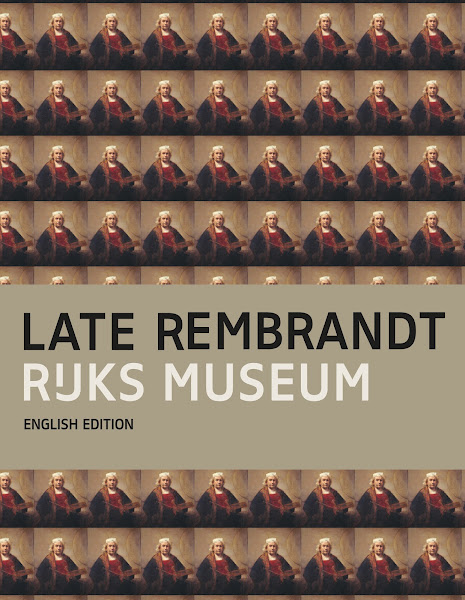
The Rijksmuseum presents its first major retrospective of Rembrandt van Rijn’s late works dating from c. 1652. This landmark exhibition, the world’s largest ever, brings together more than 90 paintings, drawings and prints from the world’s leading museums and private collections to showcase Rembrandt at the height of his power.

“For the first time in over twenty years, the Rijksmuseum will again be organising a Rembrandt exhibition, giving every generation the chance to renew its acquaintance with the great Master of the Golden Age.” Wim Pijbes, General Director of the Rijksmuseum

Daring, individual and intimate. Emerging from the shadow of tragic personal losses and financial setbacks, Rembrandt produced some of his finest work in his final years. By experimenting with paint and light, he achieved an unparalleled emotional depth, leading to his most daring, individual and intimate works.

Man Ray–Human Equations: A Journey from Mathematics to Shakespeare


February 7 - May 10, 2015
http://www.phillipscollection.org

Man Ray–Human Equations: A Journey from Mathematics to Shakespeare explores the intersection of art and science that defined a significant component of modern art at the beginning of the 20th century.

Working in Hollywood in the late 1940s, Man Ray (American, 1890–1976) created the Shakespearean Equations, a series of paintings that he considered to be the apogee of his creative vision. Drawing on photographs of 19th-century mathematical models he made in the 1930s, the series was a culmination of 15 years of exploration of the theme in a variety of mediums. Man Ray–Human Equations displays side-by-side for the first time the original plaster, wood, papier-mâché, and string models from the Institut Henri Poincaré in Paris, Man Ray’s inventive photographs of these unusual forms, and the Shakespearean Equations paintings they inspired. Placed in context with his other paintings, photographs, and objects, these works illustrate the artist’s proclivity to create art that objectifies the body and humanizes the object, transforming everyday materials into novel forms of creative expression.

The exhibition’s diverse works—including 70 photographs, 25 paintings, eight assemblages or modified “readymades” by Man Ray and 25 original mathematical models—juxtapose the artist’s Surrealist-inspired photographs of mathematical models and the associated Shakespearean Equations within the larger context of the role of the object in the artist’s work. His other canvases, photographs, and objects—some celebrated and others little-known—link his wider artistic practice with the Shakespearean Equations project and casting these accompanying works in a new light.

The exhibition is organized by The Phillips Collection and The Israel Museum, Jerusalem.

The Frick Collection. Art Treasures from New York

5 February - 10 May 2015
http://www.mauritshuis.nl/

With 36 works on loan from the Frick Collection in New York, this exhibition is a first. Never before has such a large group from this museum’s collection been lent elsewhere. The exhibition features masterpieces from the thirteenth through nineteenth centuries, including paintings, drawings, sculptures and decorative arts. This includes work by masters such as Cimabue, Van Eyck, Memling, Reynolds and Gainsborough, artists which are not, or barely, represented in Dutch public collections. This exhibition provides insight into the collection and background of the Frick Collection and its legendary founder, the wealthy steel magnate Henry Clay Frick (1849-1919).

Виртуальная выставка к 70-летию Крымской (Ялтинской) конференции

3 февраля – 31 марта
http://www.shm.ru/

Выставка представит в электронной версии хронику событий Крымской (Ялтинской) конференции на основе уникальных документов и музейных предметов из собрания Исторического музея и Центрального государственного архива кинофотодокументов.

Piero di Cosimo: The Poetry of Painting in Renaissance Florence

February 1 – May 3, 2015
http://www.nga.gov/

Overview: The first major retrospective exhibition ever presented on the imaginative Italian Renaissance master Piero di Cosimo's paintings will premiere at the Gallery. Some 40 of the artist's most compelling paintings will be on view, including beguiling mythologies and religious works (some on loan from churches in Italy), as well as one of his greatest works, the Madonna and Child with Saints Elizabeth of Hungary, Catherine of Alexandria, Peter, and John the Evangelist with Angels from the Museo degli Innocenti, Florence. Several important paintings will undergo conservation treatment before the exhibition, including the Gallery's Visitation altarpiece (c. 1489–1490)—one of the artist's largest extant paintings.

Organization: The exhibition is organized by the National Gallery of Art, Washington, and the Galleria degli Uffizi, Superintendency of Cultural Heritage for the City and the Museums of Florence.

Blue & White: British Printed Ceramics

31 January 2015 – 3 January 2016
http://www.vam.ac.uk

Blue and white printed ceramics are a pronounced British phenomenon with continued appeal for potters, artists and consumers. At its very best ceramic printing in blue results in a high-quality, technically precise and aesthetically pleasing decoration, enabling a rapid design response to society and culture.

This display features the wide variety of designs and decoration used in blue and white printed ceramics in Britain from the 1750s to present day, in both industrial and art production, demonstrating how these objects reflect British society, culture and interpret the wider world.

The display has been generously supported by The Headley Trust and includes loans from The Potteries Museum and Art Gallery, The Spode Museum Trust, The Wedgwood Museum and private collections. Displays complement our permanent collections; there are many free temporary displays around the V&A. They range in size from a single case to a room.